Showing posts with label Missional living. Show all posts

Wednesday, 2 June 2010

Visitation: Where’s the Fire?

Visitation is an annual archdeacons’ outing. 400 years ago it was the “bawdy court” — churchwardens “presented” people for a variety of colourful transgressions including marital affairs and drunkenness. These days such matters are dealt with differently, if at all. All that remains of the court is the swearing in of Churchwardens to what is the most ancient elective community office in England (older than parliament). Every three years, by convention, bishops get to give the keynote.

I was really impressed by our 800+ clergy and churchwardens en masse, with a different kind of feel for what’s going on all over Bucks. Having completed all five events for this year, people have been asking me what I said! So here goes:

We have a problem — people admire Jesus, but not the Church or Christians. We need to take this very seriously. pPeople are supposed to see in Church the life of Christ, corporately lived out among them in acts of loving service, creativity and imaginative renewal. The breakdown of this linkage says something uncomfortable about us. So how, honestly, do we reconnect?

We need to touch the real world — Almost all churches have global links, ways to open hearts and minds to bigger reality. Karen and I recommend a growing trend among clergy, which we follow, to give a week’s ministry every year to somewhere completely different overseas — goes to South Africa and I go to India. As well as the diocese, Missionary societies and other organisations like SOMA are bursting with good ideas. Churches are also doing local events to build understanding of real world issues, and raising awareness of ecological challenges, like Think Local Food Fairs and Ecological events in the Chilterns.

The big resource to bridge the gap is vibrant community. Consider the questions that are asked at Church Council meetings:
  • What have we always done?
    — good question for an organisation that lives faith in momentum, often in fabulous historic buildings

  • What have we got to do?
    — get this one wrong and there’s nothing to pass on

  • What do we want to do?
    — the Church has transformed from an arm of state into a voluntary organisation in the past fifty years. It matters very much to take account of the value we add to people’s lives

  • What ought we to do?
    — we need to ask this because we aren’t here entirely to please ourselves, but to proclaim and enact a different way of life according to Jesus’ values

  • What can we do?
    — a good question, because trying to do everything is a sure recipe for ending up doing nothing.
None of these questions, good as they are, will unlock the energy in Church or community. With all of them we need, seriously, to ask:

  • Where’s the fire?
    — In the communities we serve, in our churches, in us?
Where we answer this question things grow fast — like the Wycombe Winter Night Shelter which has grown into one of the largest voluntary organisations in the town in only 3 years, after a year 1 curate got a bug to do something about a problem everybody cared about, but couldn’t somehow engage with. Ordinary Churches also grow — like in Slough where there’s been a remarkable and steady growth in attendance across most parishes these past five years.

In the Oxford Diocese we have been trying to picture what needs to be on church agendas.
Sustaining the Sacred Centre
— right at the middle of what we do
Making disciples
— a way of life, not an hour Sunday morning
Changing the World
— not chasing our tails
Building Vibrant Community
— radically inclusive, earthed and responsive
Shaping confident collaborative leadership
— so Goodbye to the Vicar as Fat Controller of Everything

These could be seen as additional chores — extra carrots on the pile. They don’t have to be that. Rather they are ways of understanding what we’re already doing, and focusing it. Thus Six Days in Lent — not extra stuff to do, but an opportunity to carve out extra free time to feed your soul. Many people had used this really fruitfully and joyfully, including churchwardens.

Putting the act together,
I picked a story, which various people at the Visitations gave me parallels to from elsewhere in Bucks, from Turweston. It’s a small village (200 people) with a large medieval Church and, 3 years ago, a struggling small congregation. They have developed what they call “Village Worship” — a monthly meeting point with a decent breakfast, an opportunity to pray together, and simple worship. This brings between 30 and 60 people in, and has brought new heart to the village. Margaret, Andy and Harriet take up the story:

The budget, incidentally, was, er, Zero. Extraordinary things await those who ask “Where’s the Fire?

He is the Way...
Follow Him through the land of Unlikeness,
You will see rare beasts, and have unique adventures.

He is the Truth.
Seek Him in the Kingdom of Anxiety;
You will come to a great city that has expected your return for years.

He is the Life!
Love Him in the World of the Flesh
And at your marriage all its occasions shall dance for joy.

W. H. Auden:

So what are you waiting for?

Tuesday, 2 March 2010

What is Pioneer Ministry?

I have been drawn into various conversations this past month about pioneer ministry. I want precision about what it is, because otherwise it just becomes a sexy moniker for anything creative, alternative and generally involving young people. Someone's suggested to me, for example, that helping set up a monthly service in a village hall is “pioneer ministry,” or running a youth group, or recruiting a new missional community of 20-somethings and resourcing them for ministry. That last one obviously is — but what about the others? What is pioneer ministry?

Inspired by Vincent Donovan’s book Christianity Rediscovered, I’ve had an idea. Fr Donovan was a 1960’s RC missionary in Kenya who went out to sell the locals his faith, and experienced some degree of honest frustration and discomfort before he realised he could more fruitfully work from the other end. In other words if he got under the skin of Masai Culture, taking its sociology and culture as a gift of God not an obstruction to the gospel, people would find their own way of being authentically Masai Catholic Christians instead of copies of Liverpuddlian RC’s. The result of this was to fulfil his original mission brief, but from the other end to the one he had anticipted, and to produce a new and authentic strand in Catholic faith, to enrich it from a new culture.

So, the essential distinctive for a pioneer minister, I reckon, is:

a willingness and ability to go live in another sociology, listen to it and struggle to understand what it is about and how Christ is reflected in it, then work from within it to develop a community of discipleship that is authentic to it, but also to the Way of Christ.

Imagine I was 95, and discovered that the other residents of my sheltered housing scheme were brought up in a pattern of Christendom Christiantiy which had not worked for them and rendered them deeply unable to access what was good in it because they were so blocked by what had broken down and changes int he context. I work out what, positively their culture is, and what it tells me of Christ who is greater than any culture but reflected in all. I then work out a way of life that does justice to both historic Christianity, as an authentic development, and also their culture. I’m 95, but I’m a pioneer...

So the qualities required of a pioneer minisuter would be profound rootedness in the substance but not necessarily the form of historic Christianity, plus a willingness and activity to live within another sociology, plus discernment, plus the willingness to build community, plus an ability to articulate what has been learnt and interpret it back tot he rest of the Church. It’s a tall order — very much more than just being a real trendy geezer. The joy and strength of Christianity has been its capacity to enculturate and adapt whilst retaining its golden heart. “Stop the World I want to get off” is an expression of fear not faith. We need more than that. As cultures interface, develop and fracture only to re-form, the Church needs real pioneers!

Tuesday, 22 September 2009

Mission old and new in St Albans

Joy at the weekend to join over 2,000 in the Abbey to welcome Alan Smith, new Bishop of St Albans, my new episcopal next door neighbour. The sun shined as we all packed into St Albans Cathedral, site of the earliest Christian martyrdom in England.

One local paper caught Saturday’s celebration nicely. Thousands of joyful people celebrating together is of zero interest to most English media, who have their own agendas to pursue, but it is an amazing enterprise and tremendously moving to be part of such a thing. Jeffrey John and colleagues did the whole do proud — no mean achievement. It was an icon of the civil society that we take for granted, in the same way as we tend to assume all the wiring in our homes is there and works, without anyone having to pay any attention to it. In a way that's the whole idea, but it’s fascinating to see it all laid out in one place.

Bishop Alan spoke of the Church as a community of ordinary people, stirred by a willingnes to go deeper into God to do extraordinary things that make for a life based on generosity and care. It is this that transforms communities and makes disciples. It isn’t about institutions and empire building, but personal renewal and hope — discovering a different resource for life. At the end of the service balloons were released in prayer and blessing for the City and counties of the diocese. With no sudden release of helium indoors, we did not get to hear 2,000 people sounding like Mickey Mouse, but then you can’t have everything...

Wednesday, 10 June 2009

Evangelism: rewriting the Book

Many thanks to Jonny Baker’s excellent Blog for news about this project by Improv Everywhere — possibly more of a set-up job than appears at first sight, but the gift to a random couple of an off-the-peg wedding reception for nothing, celebrated with enthusiastic strangers. It’s an interesting way of spreading Joy. To go out and enact what we believe it’s all about is surely the heart of mission? If we want to have a real impact on people’s lives in places like Milton Keynes, I wonder if this is the sort of thing we need to be doing, rather than sticking in buildings, flogging dead horses, or conventional “Come and get it” Evangelism?

Friday, 15 May 2009

Birds of a feather?

ASBO Jesus frequently hits interesting nails on the head with cartoons such as this morning’s. I've been reading Bill Bishop’s book The Big Sort: How the clustering of like-minded America is tearing us apart. This shows the devastating effect on social cohesion of gated communities in many areas of American life. But this is not just a sociological problem; it’s a missional issue. What hapens when we do Church like this?

Well, I suppose, we are saying that we believe we can only do our Christianity with real people if we get the option to pick the kinds of people they are. And that doesn’t include all the people whose homes we drive by on our way to Church.

Drive-In Church seems ludicrous, but this is Drive-by Church.
We proclaim the reconciliation of heaven and earth by the power that raised Jesus from the dead working in us, but then hedge that process about with an insistence that we get a veto over who’s on the bus. If we believe we need to be like this, we’ve pretty much made it happen anyway. Doesn’t make it true, though. Thank God he doesn’t take that attitude.

And however convenient it is for birds of a feather to fly together, consider the missional credibility issue this attitude and behaviour raises:

“God is putting together a new reconciled humanity in Christ, and you could wake up and embrace your part in this glorious process. Come and join us!”

“How do I do that?”

“By ignoring and excluding at least 6 out of the following groups of people: the old, the unsexy, the Radical, the emotionally needy, people without cars, the sexy, the poor, the young, Classical Music wonks, the rich, the over-excitable, the Conservative, Rock music wonks, the married, the divorced, the people with buggies, the people without buggies, the people who like/ don’t like the Vicar, people with big houses, people with small houses...”

And people on the street, many of them looking for ways out of their own ghettoes, may be illiterate about religion, but they’re not all idiots, and most of them can spot this one for a pup from a mile off...

Or have I missed something?

Wednesday, 1 April 2009

Incarnation and ghetto blasting...

Tunbridge Wells is is a game of two halves. There’s the propserous touristy bit, and there's a smallish underbelly that originally provided the servants for the rest. In living memory two lines of children walked down Camden road to school, the ones on the right side with shoes, and many of the ones on the left without. For over 150 years, St Barnabas has unashamedly served the ones without shoes.

The Church was built by an enterprising Victorian slum priest in the classic mould, raising a noble edifice that must have seemed extraordinarily bold and beautiful at the time, on what had been a quarry and a rubbish dump. In this parish, the Gospel begins with the Magnificat
he hath put down the mighty from their seat,
he hath exalted the humble and meek
and the rich he hath sent empty away.
This may sound a tad off message for Tunbridge Wells as conventionally conceived, but that is the Christian Faith, if its mission is more than providing veneer and designer fig leaves for the bourgeoisie.

I was really moved and enriched by spending a day as the honored guest of a community that has had considerable ups and downs, but is clearly and profoundly aligned with its founding purpose, whilst looking out and pursuing a vigorous gospel agenda. Fr Ed Tomlinson took me round, and introduced me to various people in Church and community — his story of the day is here. We prayed together, talked and walked together, through the various realities that bear on St Barnabas as a missional community.

The closer you come to the streets, the more things make sense. This is not to minimise the importance of grand debates on the natonal level, which do have a local impact, but to try and establish what matters here. In word and deed this parish is about Incarnation — a clear and profound response to the incarnation of the Son of God by living it out sacramentally and in social action. Accessibility is secured by being there, not by diluting or dumbing down.

It is a very diverse congregation, where people are accepted for whom they are, to grow into being what they could be, not clones. I was struck by two or three stories of people being grabbed by a sense of holiness in the place, for some quite dramatically. It is a growing congregation, with a school which is integral to the common life, not tacked on. Here again, the St Barnabas story is about clear, honest leadership and hard work. Congratulations to Theresa Anderson, head, and colleagues. Spot the fire-breathing dragon above: hint — there isn’t one. It’s all about growing confidence among and within children who, historically, were sometimes seen as a problem.

We live in a context that increasingly reduces human beings to cardboard cutouts — just say the word based on the notional “-ism” and that’s enough to blast away with. I think we all need to be very careful about the use of language to label, stigmatise and belittle others. I remember George Kitson-Clark the historian, saying the only “ism” he’d allow in historical essays was “baptism.” Wise man.

“Do not be afraid,” says the Lord. “I have overcome the world.” There’s always been a degree of walking apart in the C of E, rather than engaging different organs in the Body of Christ to work together. Back in the Victorian age this was the tacit agreement that Anglo-Catholics could do their own thing in the places that didn’t matter, as long as the boat wasn’t rocked in the places that did. Every now and then open hostility broke out, as when neighbouring vicars denounced St Barnabas as the road to hell! Seems funny now, but they meant it. A Church experience that does not engage us deeply and radically with our fellow Christians is not enough. How can it be said that the love of God lives in such a parody of Church?

These days everything is tamer, but shame on any of us, if we go through the motions of tolerating others for whom Christ died, and in whom Christ lives, rather than striving to understand and support them wholeheartedly. And if we do this on the basis of hearsay and cliché, double shame on us. What will the Lord say on the Great Day? “If only you had known the things that make your peace, but you would not...” A ghettoised world needs a more than ghettoised Church.

The old armed neutrality, or political balancing act, is just not adequate to build the kind of Church we need to be, that the world may believe. The first principle of Benedict’s way is to come together; not primarily to debate, but to pray and share faith. Doing that then changes our perceptions of the matters at issue between us. A day’s appreciative inquiry in somewhere with strong particularity is worth of year’s management training. And given the various matters at issue involving traditionalists a solution grown by “indaba” between real people may yield a sound basis for detailed work that, doubtless, must be done by conventional parliamentary methods...


Monday, 12 January 2009

Let’s begin at the very beginning...

... the Baptism of Christ yesterday and Aelred of Rievaulx today. I was delighted to celebrate the Eucharist with a religious community this morning, Burnham Abbey. 750 years ago, Aelred wrote about the problem of “particular friendships” in the monastery. Of course monastics will have positive/ negative reactions to others in community, and preferences. G. K. Chesterton said the reason Christ bids us love our enemies and love our neighbours is that these are generally the same people. All the more so in Community. Here’s the Big Issue about this:
  1. On the one hand, If people pair off, where does that leave the common life of the house?
  2. On the other hand, all love is particular and if people hold themselves entirely aloof, how can it be said that the love of Christ dwells in them?

Aelred says that all love is particular; but chaste particular love will be generous, and increase our capacity to offer unconditional love, which does not seek its own. Selfish desire, however is always a narrowing thing. The kingdom has to be worked out in community with others; it cannot be done by ego in isolation.

Yesterday morning in Church, Rosie our Vicar took a penetrating view of the baptism of Christ as the place we have to begin if we want to be Christians. Descartes said “Cogito Ergo sum.” Really? Brains on sticks? Is it really worth getting up in the morning for that? How about “Amo ergo sum?

Mike Higton has found a starting point for understanding the theology of Rowan Williams, during a trying few hours, wasted in an airport lounge:
aware of the work-stale glances of the airport staff, of the quickly averted eyes of my fellow travellers, of the anticipated scrutiny of those I was going to meet, of the assessing gaze of my employers carried around in my head, and of my own anxious self-regard. What difference would it have made if I had let myself believe that, beyond all these, I was held in a wholly loving gaze... subject to a gaze that saw all my surface accidents and arrangement, all my inner habits and inheritances, all my anxieties and arrogances, all my history — and yet a gaze which nevertheless loved that whole tangled bundle which makes me the self I am, with an utterly free, utterly selfless love?

And what difference would it have made if I had seen each face around me in that departure lounge... as individually held in the same overwhelming loving gaze... if I believed each person around me to be loved ith the same focus, by a love which sw each person’s unique history, unique problems, unique capacity, unique gift?
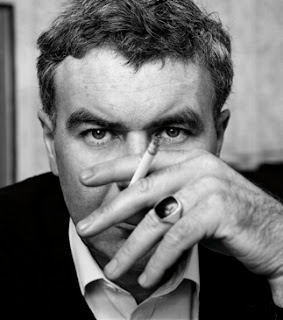
Yesterday morning, Rosie quoted Raymond Carver’s poem “Late Fragment,” writen shorly before his tragically early death:
And did you get what
you wanted from this life, even so?
I did.
And what did you want?
To call myself beloved, to feel myself
beloved on the earth
This is my beloved Son...” Jesus begins by knwing that there is a God who loves us with open eyes, always there, in whose gentle but searching sight we live, and fear, and dream and hope, and fail and try again.

If our image of ourselves is degraded and impersonal, our image of God will be impoverished, shrill and graceless. Unless we know that he calls us his beloved children, religion can be no more than a harsh, sour business. Zeal for ideology compounds this problem. The only way out is loving relationships in a community of grace. We love because he first loved us; showing us how to love, by doing it. But when you try to love someone who finds themselves unlovable, they will initially do everything they can to prove their negative image of themselves was right...

Jesus warned pharisees against sincerely searching the Scriptures for God, only to find a vengeful idol of their own invention, reflecting their own self-absorbtion, personal insecurity and self-righteousness. Perhaps, for some people, this is the Idol they can only junk by boarding the atheist bus. One sign of knowing God for ourselves is the ability to let go of paranoid anxiety, the cornerstone of Pelagianism masquerading as faith.

So here is my personal checklist of de-personalising symptoms to watch out for this coming year, each of them far more spiritual perilous than “Liberalism” or “Conservatism” could ever be:

  • Temptation to treat God as either a vengeful Mikado or breezy disengaged “boys will be boys” uncle.

  • “Glass half empty” whining and self pity.

  • Greater allowance for my own failings than those of others, and its old friend, being an expert on the shortcomings of people who differ from me, but less of an expert on my own. The only answer to this is to seek out and listen carefully to the people whose presence makes me most awkward.

  • Sarcasm really is the cheapest form of wit.

  • Selective reading of the Bible, with the subtlety and paradox of the actual text surgically removed, reducing it to a series of soundbites which prove God, giess what, agrees with me and my chums.

  • Fixation on dogma as though it were, in itself faith. Which it isn’t. It’s just the aspect of faith that’s easiest to verbalise about, that’s all; and the most provisional.
I might also take another read of these:

Sunday, 21 December 2008

Crash bang wallop: real joy!

Lost and Found Orchestra at the Royal Festival Hall. I hadn’t been there for about twenty years, then Herbie Hancock last month, and now a friend kindly gave Lucy and me tickets for this Son-of-Stomp! spectacular. It’s music, Jim, but not as we know it. No conventional instruments are involved. An orchestra of 50 (plus choir of 40) produce a riot of co-ordinated, elaboate, messy joy. The instruments are made from a variety of items off a skip (US - Dumpster), including parking cones, saws, crutches, shopping trolleys, rubber hosing and IV Drip stands. There’s dance involved, and presentation is as important as the sound. It’s a whole composite deal, where everyone is someone. It alll sounds a bit like Adiemus, but crazier. To get the best of it, you do have to be there — no mere film can do it justice.


I think we learned something last night —
It’s amazing what you can find in the things people trash — there is music hidden away in everything, waiting for people with the imagination and commitment to release it together.
Is this what Saint Paul meant when he described the Church as the “dregs of everything”?

Saturday, 20 December 2008

’tis the reason for the season

Wacky families? All of us? Weirder than this (Right h/t Brent Diggs) — plucked out of the blogosphere in random fashion? back in May Brent posted a Short Conversation with God. Here’s a snippet...

God: (sigh) Yeah. Good help is hard to find.

Me: Help?…Oh right, christians. I know what you mean. They can be kind of weird; kind of freaky. Scary even.

God: They had a rough childhood, you know. Always getting beat on and fed to the lions and such. But they never stopped feeding the hungry or taking care of the poor in those early years, they made me really proud.

Me: What happened?

God: You know how kids are. They get to a certain age and they start thinking they don’t need you anymore. That they’ve got it all figured out. Of course, I’m supposed to keep providing the blessings: the sun, the rain, cheap labor in the third world. Other than that they just want me to not bother them while they sit in their rooms and talk to their friends about me.

Me: So basically, you’ve got teenagers?

God: Yeah.

Me: Sorry.

God: I know. I forgive you.

Me? I’m just enjoying the kids playing with the rats upstairs, to Janis Joplin, now Steph is home... We’re not wacky...

Monday, 15 December 2008

Heather’s Leap of Faith

What is faith? What difference does it make? What’s the link between what we do and what God does? How much of it is a mind thing — what you believe — and how much the total package about how you live? In various ways this autumn, I have been feeling the Big Issue for the church is faith — getting real about it, getting involved, actually doing it.

A joy of this job is several hundred confirmations a year. People of all ages come, each with their own special story, seeking the laying on of hands with love. They tell me about many steps backwards as well as forwards on the way, but where people tune in to God’s music and develop their own ear for it, finding a voice, learning to sing with others brings real joy.

Someone showed me a picture this year of a bungee jump off Bloukrans bridge in South Africa, 216 metres. It’s a personal ride — others can inspire you that its doable, but for the full adrenaline, you do it for yourself. Like faith, it’s a corporate enterprise — just chucking yourself off the bridge, you'd get the thrill, but not for long. And just like faith, the better anchored you are the more exciting the ride.

I said this during a confirmation at Iver parish Church recently not knowing that there in the music group was Heather Harper. On 27 December last year she took her own leap of faith at Bloukrans, having gone to SA to celebrate a personal reinvention in her family — Click here to see a Video of her feat!
Heather says:
I couldn’t edit it and there is one ‘oh s…’ but nerves were pretty high up there!! As you can hear at the beginning I did ask God to look after me – he not only did, but enabled me to have a brilliant jump. It’s a long story as to why I was there, why I chose to jump off the Bloukrans Bridge, S.A. on December 27th 2007 (the film date is wrong) as it was the anniversary of one year of my sons recovery from alcohol and drug addiction. The more I think about your sermon last Sunday the stronger my new faith grows especially the power of prayer – I know I keep repeating it but it is quite frankly Awesome – and it makes me very happy.
And in this context I recognised the corporate reinvention we are currently unfergoing in Victoria Combe’s piece this weekend in the Financial Times, appropriately called Leap of Faith, based on an interview with Richard Chartres, Bishop of London.

Speaking of whom, many congratulations to Paul Williams, Rector of Gerrards Cross, who is to be the new Bishop of Kensington. Over my time in Bucks I've developed tremendous respect for Paul and for the prayer, discernment and hard work that goes into team and leadership development at GX, as it thrives and grows. I’ve also been with Paul at Willow Creek. I know that Paul has leadership wisdom and grace to offer the whole Church, and want warmly to congratulate him, and the Kensington Episcopal Area and the Diocese of London.

Wednesday, 10 December 2008

Thomas Merton 60 years on

On this day forty years ago, Thomas Merton, 53, stepped out of the shower in a hotel bedroom and accidentally touched a short-circuited electric fan — a random end to an extraordinary life. Also on this day, but sixty-seven years ago, Thomas Merton, 26, stepped out off the streets into the guesthouse of a monastery, seeking acceptance into the Cistercian order. His was a life of great stability and order, amidst great randomness.

December 10 is a key date, then. Merton lived a sensitive, wild, intellectual, passionate, reflective, pragmatic, holy, privileged, disordered, centred life. What makes him a man for all seasons is that you can select every second word from that list and construct a simple personality — the redeemed or the rake. To understand Merton, though, you have to stick the list back together again and give every word its due weight. Merton did not collapse the ordered into the sensory aspect of his life, but lived elements of both to the full simultaneously. Merton’s holiness is emergent, not statuesque. And that is where his power and engagement come from.

Merton is a gloriously broad both/and character. His imagination and honesty shine clearly through his stumbling attempts to find God, and be centred in him. I doubt the present management in the Roman Church would be interested in making him a saint, because he hits all the wrong institutional tickle buttons. But it is impossible to think of Merton as one long dead, because very few of us have yet caught up with him; and it is that capacity to gift oneself to the whole Church, the whole world, that constitutes sainthood.

Saints, in this technical sense, hold out to others, freely, sometimes unwittingly, some tangible actualization of holiness. Anglicans don't do the Borders Reward Card thing about sainthood — we just let it emerge and then celebrate it. Therefore I cannot pontificate about exactly where Thomas Merton is, but if you go looking for him in heaven, I bet you’ll find him in the jazz section.

Merton rode white waters of chaos, and the heightened sensitivity that comes with living on adrenaline and late nights never entirely deserted him. He found stillness, supremely in a toolshed just beyond the monastery enclosure. His sacred centre was a dancing point, and that is the great resource he offers us, as we try and drink enough water to stay alive under the incessant shower — the information and media shower, the globalization shower, the goods, services and marketing shower. Showers are dangerous places...

And Merton’s message to us? The thing he learnt that we haven’t caught up with yet? Try this:

Man begins in zoology.
He is the saddest animal.
He drives a big red car called anxiety.
He dreams at night
of riding all the elevators.
Lost in the halls
he never finds the right door.

Man is the saddest animal.
A flake-eater in the morning,
a milk-drinker.
He fills his skin with coffee
and loses patience with the rest of his species.

He draws his sin on the wall,
on all the ads in all the subways.
He draws moustaches on all the women
because he cannot find his joy,
except in zoology.
Whenever he goes to the phone to call Joy,
he gets the wrong number.

Therefore he likes weapons.
He knows all guns by their right name.
He drives a big black Cadillac called death.

Now he is putting anxiety into space.
He flies his worries all around Venus,
but it does him no good.
In space where for a long time there is only emptiness,
he drives a big white globe called death.

Now dear children
who have learned the first lesson about man,
answer your test.


Man is the saddest aimal.
He begins in zoology,

and gets lost
in his own bad news.

Thursday, 4 December 2008

Advent: Alignment, Preaching, Praxis

This is a Jesus Society, and you repent not by feeling bad, but by thinking different.” Rudy Wiebe. Advent hope? NOT cheap comfort, massaging consciences to feel better about things to which they ought to feel more sensitized. It’s about coming fully alive, aware of the dynamics around our lives and activities. Here to support our struggle for alignment, for all of us who preach, is a wee something by way of Wes Roberts from a liturgy of the Abbotsford Community (h/t Graham Peacock)

Preaching What Your Practice

If I preached what I practiced
the church would be full,
with eager listeners to the latest means
of getting away with as easy a lifestyle as possible
and still call it Christian

If I preached what I practiced
the faith would have followers
clambering at its door, eager to sign up
to wishy-washy justice and part-time belief
if I preached what I practiced.


They would be keen for sermons about
a penny for the poor, and a pound for the pension
keen to listen to homilies that spoke
of living in the reflected glory
of someone else working for peace
They would happily believe
in a faith that changes a light bulb for the sake of creation
rather than sacrifice to shape a whole new way of living
If I preached what I practiced


If I preached what I practiced
church would be popular again
with a doctrine of excuses
and a creed of compromise
a half-way house on almost anything
and a God who is washed out
watered down
and used to support anything you want

we would never need to sign up
to a faith where we find ourselves feeding the poor
by feeding ourselves less
we would just have to proclaim it without doing anything about it
if I preached what I practiced.

we would never have to make a sacrifice for justice
for we would always find an excuse
that would allow us to buy things for the taste
paying lip-service to buying things for justice

or we would never have to go green
we could get away with lime
for we could live according to our personal means and desires
speaking passionately for the planet
living passionately for ourselves
without a thought for the legacy and footprint it leaves
if I preached what I practiced

So hear my confession
that my living is not as full of God
as the words that I utter
May it be that the words
take form
and leave footprints
of someone who finally
practices what they preach


It all puts me in mind of some words of Abu Bekr, father in law of the Prophet, and first caliph of Islam:
“I thank you Lord, for knowing me better than I know myself, and for letting me know myself better than others know me. Make me, I pray, better than they suppose, and forgive me for what they do not know.”
Related Posts Plugin for WordPress, Blogger...