
Christianity is a fundamental root of societal values in Germany. Official. I just heard it from the
Bundeskanzlerin herself. Speaking in Munich to 6,000 people, the Prime Minister of the largest democracy in Europe acknowledges freely and imaginatively the significance of Christianity as one of the great root of her country’s social values. She is not saying these humanistic concepts could not have been developed in other ways, but the fact is it was from and through Christianity that they have been.

Here in Bavaria there is a refreshing absence of crude secularist rant, along with scare stories got up by the right wing press to suggest that any departure from Victorian morals and dogma means the end of Christianity and ruin of society. Those fears and fantasies are expressed on the margins of society, where they belong.

Neither do I detect the lazy old English idea you “leave morality to the bishops”. Mrs Merkel calls for a dialogue between churches and society, where both engage closely and bless each other and are willing to be changed according to their values and experience — so no crude monopolies of truth, no slippery slope panic, no fear that engagement between churches and society will corrupt the Churches or Confessionalise the State. Freedom is a Christian value, but not egoistical freedom from taking responsibility. Christian freedom is the use of possibilities to follow values as a way of supporting others — another one of Mrs Merkel’s core Christian values.

All she is saying is that there needs to be respect, realism, self-awareness and truthfulness. In this context, Mrs Merkel is just announcing €60Bn of cuts between 2011 and 2015, asking around various possibilities. She isn’t claiming a godlike command of all possible answers, but owning up to a serious problem, addressing pragmatic reality, asking for hep and obviously winning some respect for her candour. How refreshing! How grown-up!

Politicians, even controversial ones with cuts to announce, seem to be held in higher respect in Germany. Wondering why I am told they have a more realistic mandate from a more fully democratic voting system, and that there is a higher value of corporate civic life here. They are not thought to behave that much better, but they are held to account more tightly over their views as well as their expenses. They have to treat people more like grown ups, partly because there is a very direct relationship between how many votes and how much power. There is often a higher degree of historical awareness and pragmatism, with less simple sloganising. By comparison, much UK debate about Church and society, such as it is, simply bears out the old maxim that Clichéd words reveal clichéd thought. There has to be a better way!

 Christianity is a fundamental root of societal values in Germany. Official. I just heard it from the Bundeskanzlerin herself. Speaking in Munich to 6,000 people, the Prime Minister of the largest democracy in Europe acknowledges freely and imaginatively the significance of Christianity as one of the great root of her country’s social values. She is not saying these humanistic concepts could not have been developed in other ways, but the fact is it was from and through Christianity that they have been.
 Here in Bavaria there is a refreshing absence of crude secularist rant, along with scare stories got up by the right wing press to suggest that any departure from Victorian morals and dogma means the end of Christianity and ruin of society. Those fears and fantasies are expressed on the margins of society, where they belong.
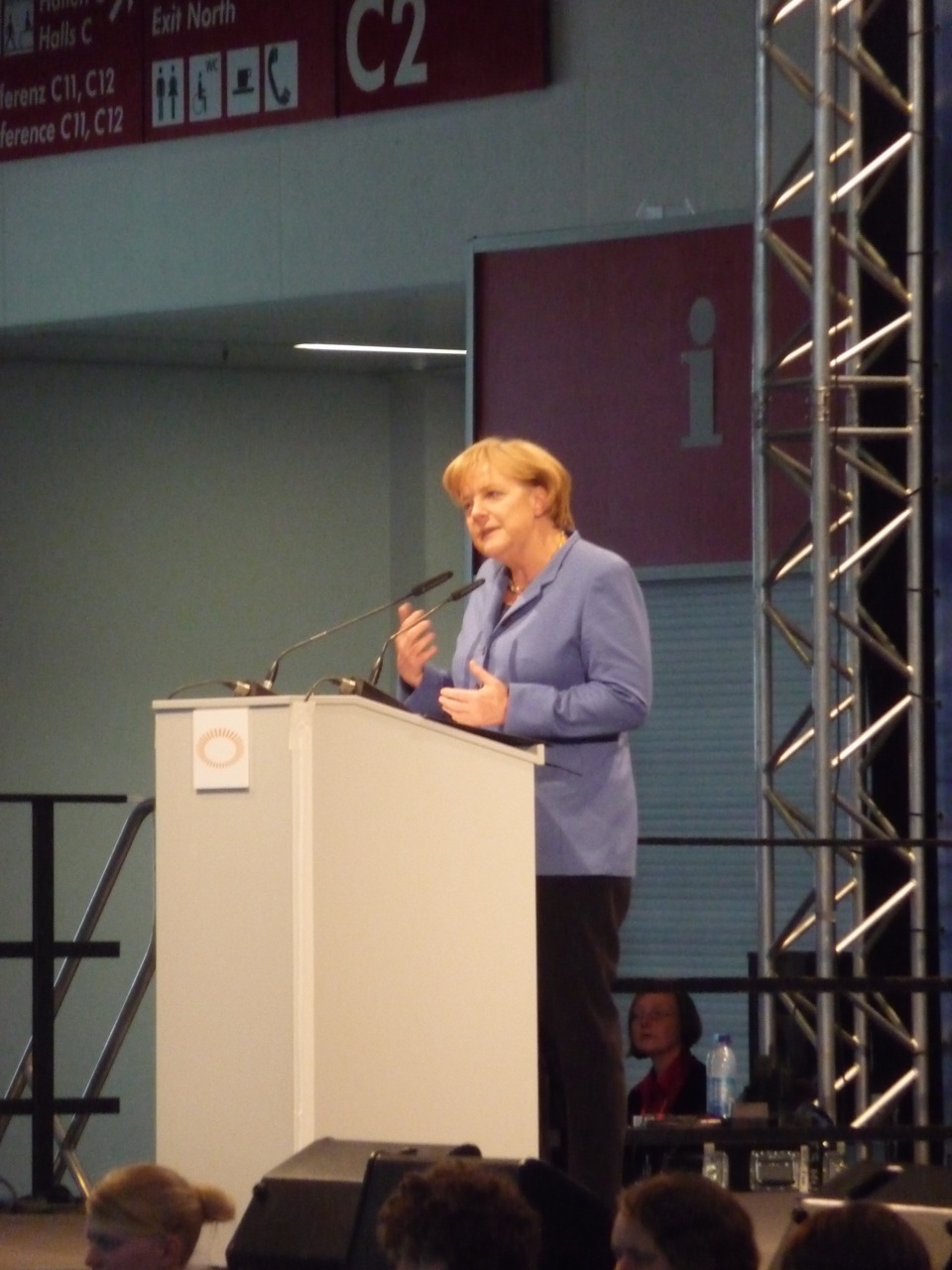 Neither do I detect the lazy old English idea you “leave morality to the bishops”. Mrs Merkel calls for a dialogue between churches and society, where both engage closely and bless each other and are willing to be changed according to their values and experience — so no crude monopolies of truth, no slippery slope panic, no fear that engagement between churches and society will corrupt the Churches or Confessionalise the State. Freedom is a Christian value, but not egoistical freedom from taking responsibility. Christian freedom is the use of possibilities to follow values as a way of supporting others — another one of Mrs Merkel’s core Christian values.
 All she is saying is that there needs to be respect, realism, self-awareness and truthfulness. In this context, Mrs Merkel is just announcing €60Bn of cuts between 2011 and 2015, asking around various possibilities. She isn’t claiming a godlike command of all possible answers, but owning up to a serious problem, addressing pragmatic reality, asking for hep and obviously winning some respect for her candour. How refreshing! How grown-up!
 Politicians, even controversial ones with cuts to announce, seem to be held in higher respect in Germany. Wondering why I am told they have a more realistic mandate from a more fully democratic voting system, and that there is a higher value of corporate civic life here. They are not thought to behave that much better, but they are held to account more tightly over their views as well as their expenses. They have to treat people more like grown ups, partly because there is a very direct relationship between how many votes and how much power. There is often a higher degree of historical awareness and pragmatism, with less simple sloganising. By comparison, much UK debate about Church and society, such as it is, simply bears out the old maxim that Clichéd words reveal clichéd thought. There has to be a better way!


