
What is Education in a fast changing world? How do we really develop people, including ourselves? In church and school, and church school, I came up with this for today’s keynote for the Board of Education: a picture that’s worth a thousand words!

 One dark, disturbing part stood out for medieval carollers among the stories connected with Jesus’ birth:
Herod, the King, in his raging,For the original readers of St Matthew’s gospel, however, the story was very much less shocking than it is to us, with our post-Christendom sensibilities and Christ derived values:
Charged he hath this day
His soldiers in their strength and might,
All children young to slay.
 Pre Christian people shared the almost universal fatalism about the activity of tyrants. What they got up to was largely their own affair, and without a sense that history was heading anywehere in particular, let alone the coming of Christ as universal judge, there was no ultimate bar to which they could be held to account. So you simply accepted that they got up to some funny old things. The vulnerable didn’t matter by comparison.
 including the institutional Churches, still struggle to express fully. So...The value Christ sets on children makes the work of protecting Children especially central. This is why betrayal of children by their pastors, or any attempt by any institutional church to cover up what is going on, is so shameful. It’s possible, as child protection bishop for this diocese, to see this high volume job (for example we hold the process for about 6,000 CRB registrations) as a mainly administrative matter. It’s not. It means nothing without a culture of openness and mutual knowledge within which anomalies show up as anomalies, and are followed up. And when you go beyond preventative child protection, we may ask ask what gifts and attitudes are we giving to our children as resources for living, how much of our time, or are they mainly seen as problems merely to be tolerated, personal trophies for their parents, or teeny consumers?
 I enjoyed doing a short introduction for an All-Age worship training day at Worminghall put together by David Kaboleh, the Vicar. Main sessions were led by Nick Harding — Children’s Ministry Officer in the Diocese of Southwell and Nottingham, a wonderful and inspiring trainer who somehow managed to draw a mainly adult audience into various all ages experiences to illustrate his various points. Nick also led a session on a very interesting question about which he’s written a booklet, Boys, God and the Church (can be downloaded here)
Dear Grandma,
This morning Mummy took me to Church for the very first time. I thought we were going to Rainbow Toddlers because we went through the big giant’s door, but we weren’t because the room was different and much bigger. It was cold, with nothing on the floor, and we didn’t take our coats off all the time we were there.
There was a man at the door who didn’t know Mummy but he sort of smiled at her. She got a book and piece of paper. I don’t think he saw me because I didn’t get anything. Only the grown ups did.
Auntie Joan was there from toddlers and my special friend Lucy. Lucy wasn’t allowed to sit by me because she was with her Daddy and big sister. Our Daddy didn’t want to come. I stood up on the seat to wave to Lucy but her Daddy told her to sit down and be good. I only wanted to wave. The lady behind us asked Mummy to take me off the seat because I was making it dirty so she carried me. I wanted to see the man who was talking.
Soon we started to play games. First it was dressing up, but only the Men at the Front were allowed to play. It wasn’t fair really because I wanted to put on a big dress like them. We all played hide and seek though, Grandma, even the grown ups. You get down and hide behind the seat, and when the man says the magic word “Amen” you jump up again. They played that three times!
Singing time was good fun, but I didn’t know all of the songs. They sang some that we sing in Rainbow Toddlers, clapping and dancing songs. There was a big space for dancing and jumping right between the seats but nobody used it. It was hard to dance in Mummy’s arms but I made a big noise clapping. Lucy did too but her Daddy told her to be quiet. Grandma, can you clap quietly? The grown-ups were very good at it in Church.
You have to pay to go Church, Grandma. Two men came round with big big plates and collected all your money. Some people didn’t have any money so they gave them an envelope instead. But you know something, Grandma, you didn’t get any drinks and biscuits even though you’d paid. They just gave it all to the Man at the Front. I think he must be very rich.
Later the Man at the Front said that all the children had to go out. I think he was fed up with us. Mummy took me to the room where we have Rainbow Toddlers but it wasn’t the same. Mummy wanted to go back into Church to listen to the man talk about Jesus. Poor mummy — I’m sure it would be nicer for her to read my book about him. I played with Lucy for a while but then I wanted Mummy to come back. The lady said that she wouldn’t be long, but she was. I cried because I missed my mummy but Lucy kissed me better.
At the end, the dressed up man was standing by the door. He asked Mummy if she had been before and said he hoped that she would come again. He shook Mummy’s hand. He didn’t speak to me. I don’t think he wants me to come again. Perhaps it’s because I can’t clap quietly or because I wanted to wave to Lucy. I didn’t mean to dirty their seat, Grandma — I only wanted to see.
I slept all afternoon when we got home. Daddy said I can go every week if it makes me sleepy, but Grandma, I’m not sure I want to go again.
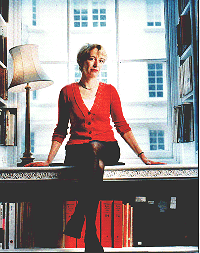 Is Facebook doing all our brains in? Susan Greenfield is the country’s most distinguished popular brain scientist, and has asked hard questions in the house of Lords about the harmful effects that hours spent on Facebook may be having on our childrens’ attention spans and social development.
devoid of cohesive narrative and long-term significance. As a consequence, the mid-21st century mind might almost be infantilised, characterised by short attention spans, sensationalism, inability to empathise and a shaky sense of identityWoody Allen once said his Brain was his second favourite organ, so this is an urgent question. And, typical Anglican, my instant superficial response is to say I believe that, as reported, her words are both entirely correct and entirely wrong-headed.
 Her concern is fundamentally right, because everything we experience has some impact on the brain as a complex self-organizing system. We learn by adaptation, and it is impossible to think that, however we fill our hours, this will have no impact on our personalities, expectations, skills and aptitudes.
 I have learnt from Professor Greenfield, and others, that the brain is not a single entity. It's more accurate to think of it as a bundle of specialised centres, each developing its own competence by adapting to experience. This makes personality, the vital precondition of rich social interaction, an emergent reality. We have an amazing ability, especially during teenage neurological growth spurts, to develop superabundant multiple interrelated abilities, rather than simply manage static or limited capacity. The whole brain is fantastically adaptive and compensating.
 Screentime may be damaging eyesight, obesity levels, the ways people connect stories and spirituality; or not. Research is always welcome. But the autism thing is surely nonsense. How can babies, for example, have been corrupted by hours on Facebook, of all things? Autism seems to be a parking lot for anything we don't like and don’t get — it fulfils the social function witchcraft did in Salem, MA. Witness recent hysteria over MMR jabs.
 Finally, and this is the thing people my age never get at first, the whole point of social media is not the screen, but the human beings with whom you communicate using the screen. My kids don’t MSN because they love MSN technology. They do it to be with their mates. Offering a rich palette of ways of interacting, mediated by screen, actually enriches their interactions. All I could do at their age was talk for hours on the phone with my girlfriends. They can share videos, etc.
 Therefore, above all, I beg to differ because the vast majority of young people I meet are intensely socialised and socialisable, very aware of others, and far less geeky and withdrawn than many of my compadres were thirty years ago. My generation’s geekiness resulted from hours reading books on our own, when we should have been socialising with small talk down the pub.
 Christmas Message, please. One that will fit in 140 characters on Twitter? OK — I choose one from Thomas L. Friedman’s Op-Ed article in yesterday’s New York Times — “we don’t just need a bailout. We need a reboot.” Sounds good to me, and I shared it with congregations at Brill, Newport Pagnell and Weston Underwood this Christmas.
 For the family record, Sunday we were all together for the baptism of Lucy’s latest godchild, Shanice Isobel White. As you can see she is just completely gorgeous and wonderful, and everyone had a great day. Teaching, appropriately, was from Luke 24 about greatness in the Kingdom of heaven, servanthood and becoming as a child. It was all a great reality checkpoint for a new year’s work.


 I was at the toddler service at Buckingham Parish Church this Wednesday. Claire Wood was doing a wonderful storytelling job on the tale behind the famous icon you see everywhere
  (Left), explaining how Sarah really wanted a baby and couldn't seem to get one. She used this excellent Russian Doll (Right) for Sarah. And when the baby came, asked Claire, what kind of baby do you think it was? (boy? girl?) Quick as a flash young Eva replied, “One a lot less decorated than that one!”
 Like judgment day, but with Pancakes instead of Cyborgs. No street party, but today’s job interview colleagues got fresh pancakes with their breakfast, and we all had a bit of a do with children and a friend of Anna’s from school later.
 Now for the unexpected serendipity. Whilst discussing mid life crises (I've got this friend, see...) over breakfast, it struck me that one modest step towards buying a motorbike / big guitar would be a Marmite Pancake. Soon afterwards a highly esteemed friend walked in, over the most dangerous age for this sort of thing you understand, but spontaneously made and ate his own Marmite Pancake. Friends, trust me, this dish is a bad as it sounds. Don’t do it. And if that’s saved you from a midlife crisis, my little action today has done the world some good...


